Israel is 2 hours ahead of Greenwich Meantime (GMT). Daylight Saving time starts on the Friday before the 02 April. The move back to standard time occurs late September/early October according to the Jewish calendar falling on a Saturday night between Rosh Hashanah (Jewish New Year) and Yom Kippur. During this period, Israel is 3 hours ahead of GMT.
Culture & Dress
 Despite the inevitable ups and downs of travelling abroad, you will generally be shown great hospitality in Israel. Israel is generally a very relaxed country with a western-oriented outlook. Respect for religion is important to most Israeli’s and there are a few situations when this should be kept in mind.
Visitors to some synagogues, most churches and all mosques should be aware that entry will normally not be permitted to those with exposed legs or women with exposed upper arms. Women may be asked to cover bare arms and legs in both mosques and synagogues. Carry a wrap or bring along long sleeve shirts for these occasions. Further, men should cover their heads when entering a synagogue with a hemispherical shaped skullcap called a kippah or yarmulke (often provided by the synagogue) though a normal sunhat is also acceptable and in mosques both men and women will be required to take off their shoes before entry.
Israeli people are generally quite direct in what they have to say. Openness and honesty are often valued over politeness and projection of niceness. Direct personal questions are common and should not be taken as offensive. Israelis are also very kind and hospitable. When you make a friend here, they will do their best to take care of you while you’re in their country. Foreign visitors are deeply appreciated and are generally shown the utmost respect by locals.
Safety
While Israel is for the most part safe to visit, it is no secret that conflict can arise and escalate quickly. Be sure to stay updated before and during your trip. Areas of issue are usually on borders and the Gaza strip is to be avoided. However don’t be afraid to visit Palestinian territories, as this offers a great insight into history as well, with towns/cities such as Jericho and Bethlehem not to be missed.
Languages
Hebrew & Arabic are the official languages of Israel and the Palestinian territories, however English is widely spoken.
Remember Shabbat
Every Friday as the sun sets, the Jewish Sabbath begins and most of Israel shuts down until the following evening. There will be no public transportation, most stores and restaurants close, and the roads will be noticeably calmer. Bare this in mind before making travel arrangements in Israel as you don’t want to find yourself stranded somewhere!
However, the extent to which Shabbat is observed depends on where you are in Israel: in West Jerusalem pretty much everything will be closed, but in Tel Aviv a significant number of bars, restaurants, and stores remain open and the city stays very much alive!
Seasons and Weather – What to Pack
 The winter months of November to March are the coldest in Israel with snow in the northern reaches of the Golan Heights, and occasional snow fall in Jerusalem. The coast experiences the heaviest rainfall at this time though temperatures in places like Eilat are reasonably pleasant still.
Jerusalem and other highland areas are splendid in the summer (June – August) when temperatures are high with balmy evenings, and little chance of rain. Tel Aviv and the far south of the country are usually several degrees warmer, making it the perfect place to soak up the sun beach side. If you plan on visiting the Dead Sea or Negev Desert be sure to pack a hat to protect you from the sun.
The seasons of spring (April and May) and autumn (September and October) are the best time to visit Israel when temperatures are pleasantly mild throughout the country. During these spring and autumn months pack clothes that you can wear in layers, so that whether sunny skies or cool weather you will always be prepared.
Summertime Travel in Israel – April to November
- Keep clothing loose fitting and lightweight during the summer.
- Cotton and linen garments will keep you comfortable and are easily laundered.
- Jerusalem and the north can be cool in the evening – pack a sweater or other lightweight warm layers.
- Think about covering up against the summer from May through September. Long shorts, skirts and even long-sleeved shirts will help you when the sun is most intense. Don’t forget a comfortable hat and sandals for walking in the sun.
- Don’t forget your bathing suit and goggles for enjoying the surf whenever it comes your way.
- For visits to Park Alona & Hezekiah’s Water Tunnel we recommend you bring closed water shoes.
Year-round in Israel
- Sunglasses and a hat. You’ll find the sunlight is stronger that what you’re accustomed to, even in the winter. A hat is also useful sun protection, year-round.
- For women – have an easy, packable skirt, scarf and/or shawl for covering up in Israel’s holy places. Throw it in your bag in the morning and you’re ready for whatever stops you make.
- Comfortable walking shoes, sneakers and sandals.
- Swimwear is appropriate year-round, whether it’s to splash in the hotel’s indoor pool or hit a beach on a warm, winter day in the southern part of the country.
- Sunscreen and insect repellent are useful items as well.
- Water bottle – it’s a dry country and you should be drinking regularly.

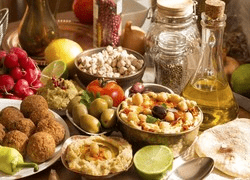 Food in Israel is extremely diverse and generally very good. A well known favourite is falafel – small fried balls of mashed chickpeas, usually served inside unleavened pita bread with houmous (a cream of chickpeas, tehina, onion, lemon and olive oil). Another popular dish is Shawarma, sliced turkey meat which is also served in pita bread. Also try Me’orav Yerushalmi (Jerusalemite mix) which contain several types of meat, or Schnitzel. Fresh fruit and salads are very popular in Israeli cuisine and a Fatoush salad is a must try – chopped onions, cucumbers and herbs are mixed together and topped with fried bread and sometimes feta or grilled halloumi cheese.